Skip to main content...
runway-progress-news-tile.jpg
July 9, 2026

New Runway Construction Unlocks Terminal 2 Growth

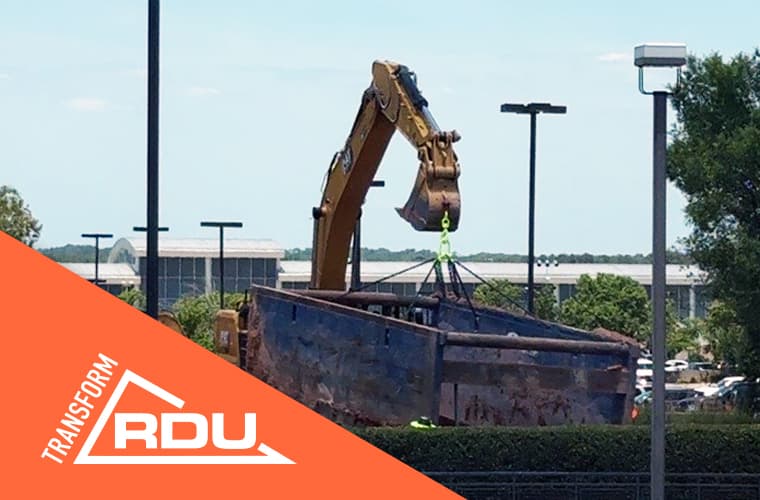
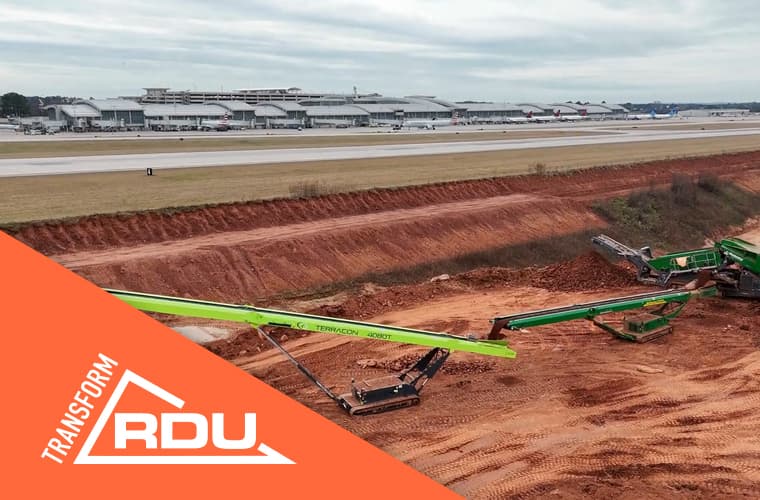
Raleigh-Durham International Airport’s main commercial runway is reaching the end of its lifespan. Built 40 years ago, it’s now due for replacement, and the airport is deep into the work required to make that happen. Today, we’re going behind-the-scenes with Bill Sandifer, executive vice president and chief development officer, to check in on RDU’s largest construction project in the airport’s history. View on Instagram Moving Lots — and Lots — of Dirt Before a new runway can be paved, crews must move and plane more than two miles of terrain. “Where we sit here today is, we’re on the cusp of about a million cubic yards being moved,” Sandifer said. “We’ve got about four million left to go.” The earthwork is massive, but it’s only part of the story. The location of the current runway limits how much the terminal can grow. Moving the runway further away opens the door to more gates at T2, including more international gates, a critical piece of RDU’s long-term air service growth. Relocating Lumley Road Getting there requires relocating a portion of Lumley Road, which currently sits too close to the end of RDU’s Runway 23R, inside what’s known as the runway protection zone. Construction on the new Lumley Road alignment begins later this year and wraps in summer 2028. From there, crews will remove the old roadway and regrade the area, setting the stage for the new runway’s opening in 2029. Want to learn about the runway replacement project? Read more at TransformRDU.com.
pe3-construction-progress-news-tnail.jpg
May 8, 2026

What’s New at Park Economy 3?

One of our most visible Transform RDU projects — the expansion of RDU’s Park Economy 3 lot — is well underway. As we continue to make progress, here’s where things stand with the airport’s largest parking facility. More Spaces on the Way Today, almost half of the planned 10,936 spaces at Park Economy 3 are open and available to customers. Here’s a forecast of what’s ahead: Late summer: approximately 7,500 spaces availableLate fall: approximately 8,500 spaces available Spaces will open incrementally as work wraps up in different areas of the lot. A New Customer Amenity Building A brand-new Customer Amenity Building is nearing completion and is expected to be open to the public in late summer.When it does, visitors will find restrooms, vending machines and more. Some Authority staff, including law enforcement and public safety personnel, also will occupy office space at the new amenity building. What’s Being Built and Improved The Economy 3 expansion project isn’t just about adding new parking. RDU is adding experience upgrades, too: Dynamic space count signage is currently in testing and commissioning. Eventually, visitors will be able to find real-time space availability by section upon arrival.The entry plaza has doubled in size to six lanes, making your arrival even smoother.Work is now underway to expand the exit plaza. We’re also adding a second bus loop road to improve traffic flow.Crews are rehabilitating existing portions of the lot to bring everything up to the same standard. Going Solar Park Economy 3 is getting greener, with solar panels being installed across the lot. About one-third of the panels are operational right now and in the testing and commissioning stage. The remaining panels are on track to become operational and enter testing by the end of spring. Stay in-the-know about what’s happening at Park Economy 3 at TransformRDU.com.
T1-Curb-Expansion-news-tile.jpg
March 18, 2026

RDU Roadway Construction: Customer Impacts Ahead

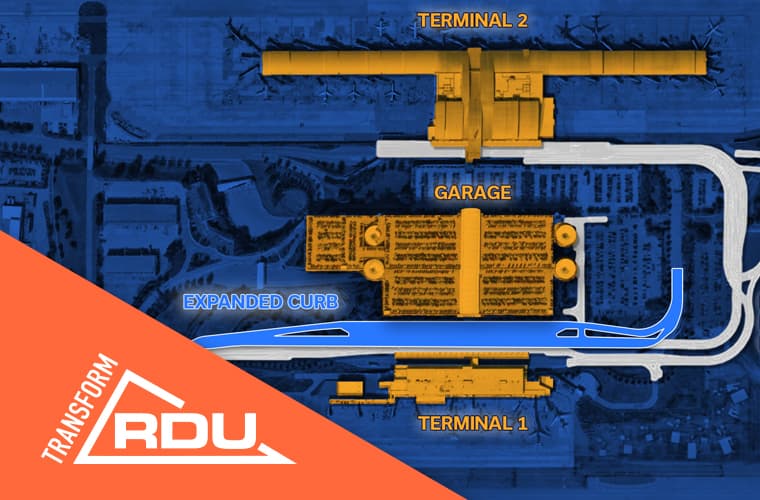
RDU is growing to meet the air travel needs of our thriving community. One of the critical projects in Transform RDU, the airport’s $2.5 billion, 10-year capital program, is the widening and extension of John Brantley Boulevard, the main roadway that connects the airport’s terminals. Early construction is underway on the project, with anticipated road impacts beginning in mid-2027. While the new roadway is being built, guests flying out of Terminal 2 will be dropped off at a temporary Terminal 2 departures curb. The temporary curb will be located between the parking garage and Terminal 1 and is anticipated to open in early 2028. Here’s how that will change your travels through RDU: Airport guests flying out of Terminal 2 will be dropped off at the temporary curb near Terminal 1 while a new departures-level bridge is being built at Terminal 2. New elevators, escalators and stairs will move guests from the temporary curb into the parking garage between Terminals 1 and 2. Guests will pass through the parking garage with the assistance of moving sidewalks to reach Terminal 2. While the pedestrian journey to Terminal 2 will temporarily take longer, the end result will be a roadway system that improves traffic flow, reduces delays and minimizes bottlenecks. The temporary curbside will also allow for the potential expansion of Terminal 1 in the future. RDU will take steps to minimize impacts during construction, with additional signage, employees on-site to help guide the way for travelers, and increased assistance for passengers with mobility impairments. More detailed information about customer impacts will be available closer to the implementation of the temporary Terminal 2 curbside. You can follow RDU’s transformation from every angle at TransformRDU.com.
Seven_Members_of_the_First_Lady_Astronaut_Trainees_in_1995_-_GPN-2002-000196.jpg
March 1, 2026

Celebrating Women’s History Month at RDU Airport

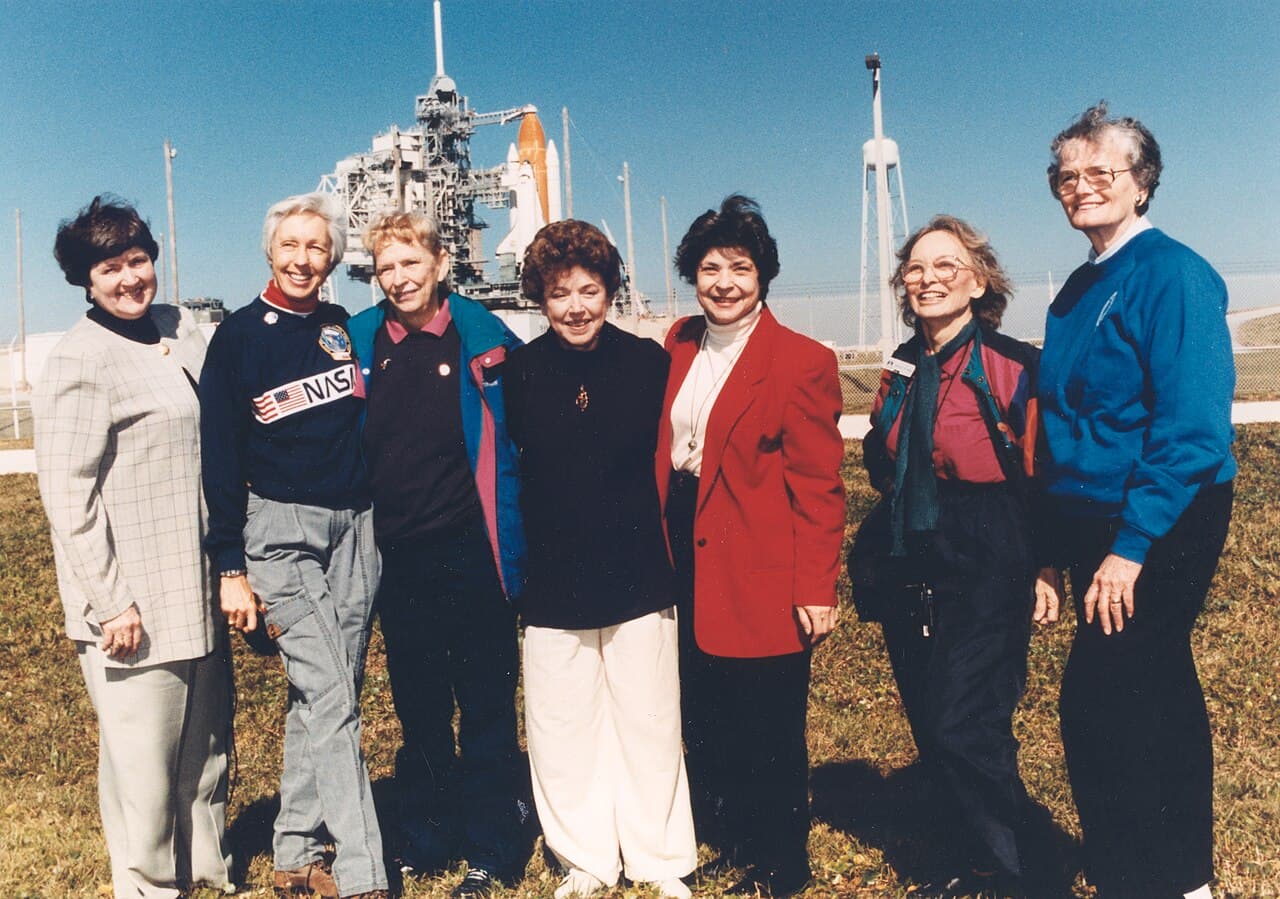
March is Women’s History Month, and this year we’re proud to recognize some of the remarkable women — from aviators to engineers and community leaders — whose contributions have helped shape the field of aviation. These trailblazers share North Carolina roots and deep ties to flight, innovation and leadership. Viola Gentry Born in Rockingham County, Viola Estelle Gentry was a pioneering aviator best known for setting the first non-refueling endurance flight record for women in 1928. She learned to fly in 1924, becoming the first woman from North Carolina to pilot an airplane and helping to expand opportunities for women in early aviation. Gentry continued promoting flight throughout her life and was recognized for her courage and dedication to aviation history. Myrtle “Kay” Cagle Myrtle “Kay” Thompson Cagle, a native of Selma, North Carolina, was a gifted pilot, instructor and aviation ambassador. She became one of the select group of women involved with the Mercury 13, the group of female aviators who participated in astronaut testing during the early NASA space program. In addition to her flying achievements, Cagle ran a Triangle-area airport and charter service, wrote for the News & Observer and other local media outlets, and taught flight to thousands of students. Tiny Broadwick Born in Oxford, North Carolina, in 1893, Georgia Ann “Tiny” Broadwick was a pioneering parachutist and aerial performer. Broadwick was the first woman to jump from an airplane. She is credited with inventing the parachute ripcord, a safety innovation that has saved countless lives. Her daring spirit and contributions to aerial safety make her a standout figure in early aviation history. Katharine Stinson Katharine Stinson forged a path in engineering at a time when few women entered the field. Born in Fuquay-Varina, North Carolina, in 1917, she found her first aviation job working as a mechanic at just 15 at the former Raleigh Municipal Airport. Stinson earned her degree in mechanical and aeronautical engineering from North Carolina State University and went on to become the first female aeronautical engineer hired by the Federal Aviation Administration. Stinson helped develop safety standards and contributed to advancements in aircraft design and certification. NC State later recognized her with the naming of Katharine Stinson Drive, located on campus near Hillsborough Street. RDU’s First All-Female Board Leadership Team The Raleigh-Durham Airport Authority observed a milestone in 2025, as it welcomed its first all-female Board leadership team — Chair Tammie Hall-Roberts, Vice Chair Nina Szlosberg-Landis, Secretary Yesenia Polanco-Galdamez and Treasurer Shelley Winters. Their leadership and vision is helping guide RDU’s growth and transformation.
jbb-extension-construction-begins-blog-post-v2.jpg
February 16, 2026

John Brantley Boulevard Extension is RDU’s Road to the Future

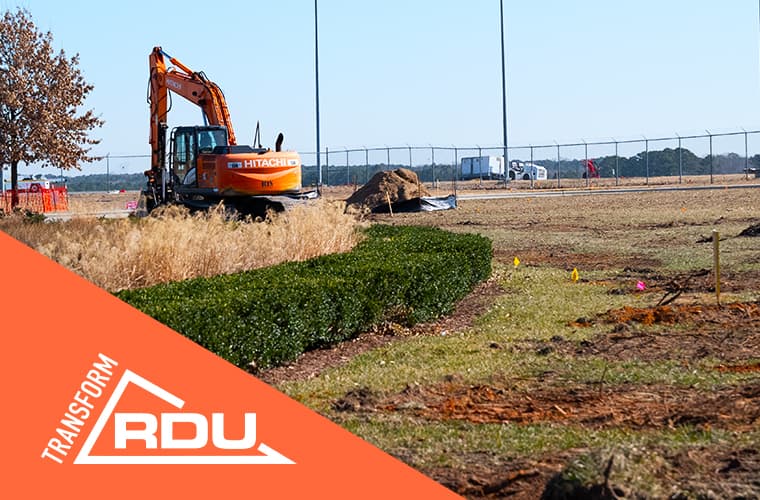
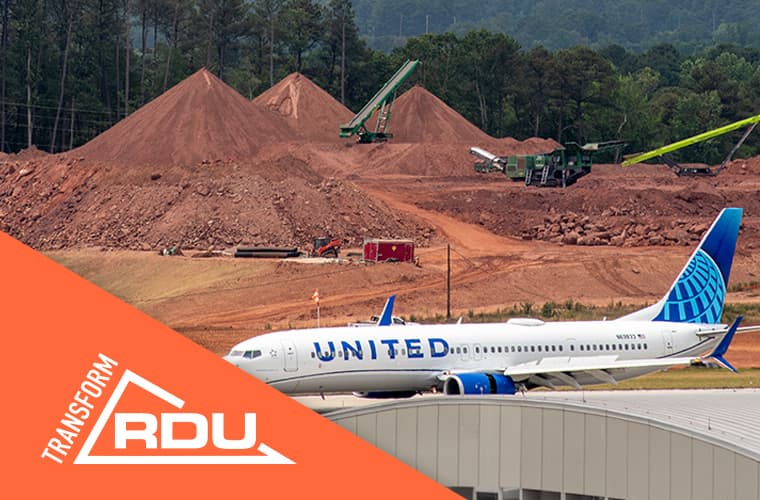
Early construction is now underway on one of the airport’s most important infrastructure projects: the extension and widening of John Brantley Boulevard. The airport’s primary roadway brings millions of travelers to RDU’s terminals each year. The John Brantley Boulevard extension is one of four major projects in the airport’s Transform RDU capital program. Once complete, John Brantley Boulevard’s modernized design will reduce congestion, minimize bottlenecks and make arriving and departing less stressful for travelers, employees, airport tenants and those picking up or dropping off guests. How will John Brantley Boulevard look in the future? Your drive into RDU will follow a new path in the coming years. The addition of m ore lanes to John Brantley Boulevard will improve overall traffic flow around the airport. And an expanded Terminal 2 curbside will allow for faster, more efficient loading and unloading. The project also includes reconfiguring the intersection at International Drive, located between Terminals 1 and 2. This extension and lane remapping will reduce merging conflicts and improve safety for drivers navigating through the heart of RDU’s campus. Preparing for change Construction work has begun and will be completed in phases. In later phases, there will be temporary lane changes and some pick-up and drop-off modifications. Look for traffic impact information at TransformRDU.com and on the airport’s social media accounts once those impacts grow nearer. RDU’s main boulevard is an important part of every visit to the airport. By investing in roadway enhancements today, RDU is ensuring a smoother trip for years to come.
wheeler-bhm-edited.jpg
February 1, 2026

Exploring Black Aviation History at RDU

Team RDU celebrates Black History Month each February in recognition of the many African-American aviators, airport staff and community leaders who have shaped today’s landscape and paved the way for future flyers. This year, we’re recognizing some of the trailblazers with ties to RDU and North Carolina who have left their mark on aviation. Shirley Tyus South Carolina-born Shirley Tyus began her aviation career as a United Airlines flight attendant in 1972, but her love for piloting brought her to RDU, where she piloted cargo aircraft for Wheeler Airlines. Ultimately, Tyus entered history books as United’s first Black female pilot. Vernon V. Haywood The late Vernon V. Haywood served in the U.S. Army Air Force as commanding officer of the 332nd Fighter Group’s 302nd Fighter Squadron. One of the legendary Tuskegee Airmen, the Raleigh native was one of the U.S. Air Force’s first Black jet pilots and instructors. Phil Freelon Even if you aren’t familiar with the name of late Durham architect Phil Freelon, you’ll recognize his work. He was part of the architectural vision of RDU’s Terminal 2, central parking deck and the former Terminal C — as well as the National Museum of African American History and Culture in Washington, D.C. Warren Hervey Wheeler When Capt. Warren Wheeler began operating Wheeler Flying Service (later Wheeler Airlines) out of RDU in 1973, it became the first Black-owned airline certified by the U.S. Federal Aviation Administration. The Durham-born Wheeler previously made history as Piedmont Airlines’ first Black pilot in 1966. Current and Former Raleigh-Durham Airport Authority Board Chairs Eight Black men and women have served as chair of the Raleigh-Durham Airport Authority Board — the group responsible for developing and overseeing RDU’s policy agenda and governance. The list includes current chair Tammie Hall-Roberts, who began her term in June 2025. Farad Ali Pete Allison Bill ClementBert Collins Ken Gibbs Ron GregoryTammie Hall-Roberts Patrick Hannah